






Research Notes
Date
Tags
Proper peptide storage directly impacts stability, consistency, and research reliability. This guide outlines the key variables that define how peptides should be stored and handled in laboratory and analytical environments.
Peptides are highly sensitive organic compounds composed of short amino acid chains. Their three-dimensional structure and chemical integrity can degrade rapidly when exposed to improper storage conditions, affecting reliability, potency, and reproducibility in research environments.
Most peptides should be stored in a controlled, cool environment. Temperature fluctuations accelerate molecular degradation pathways and reduce stability over time:
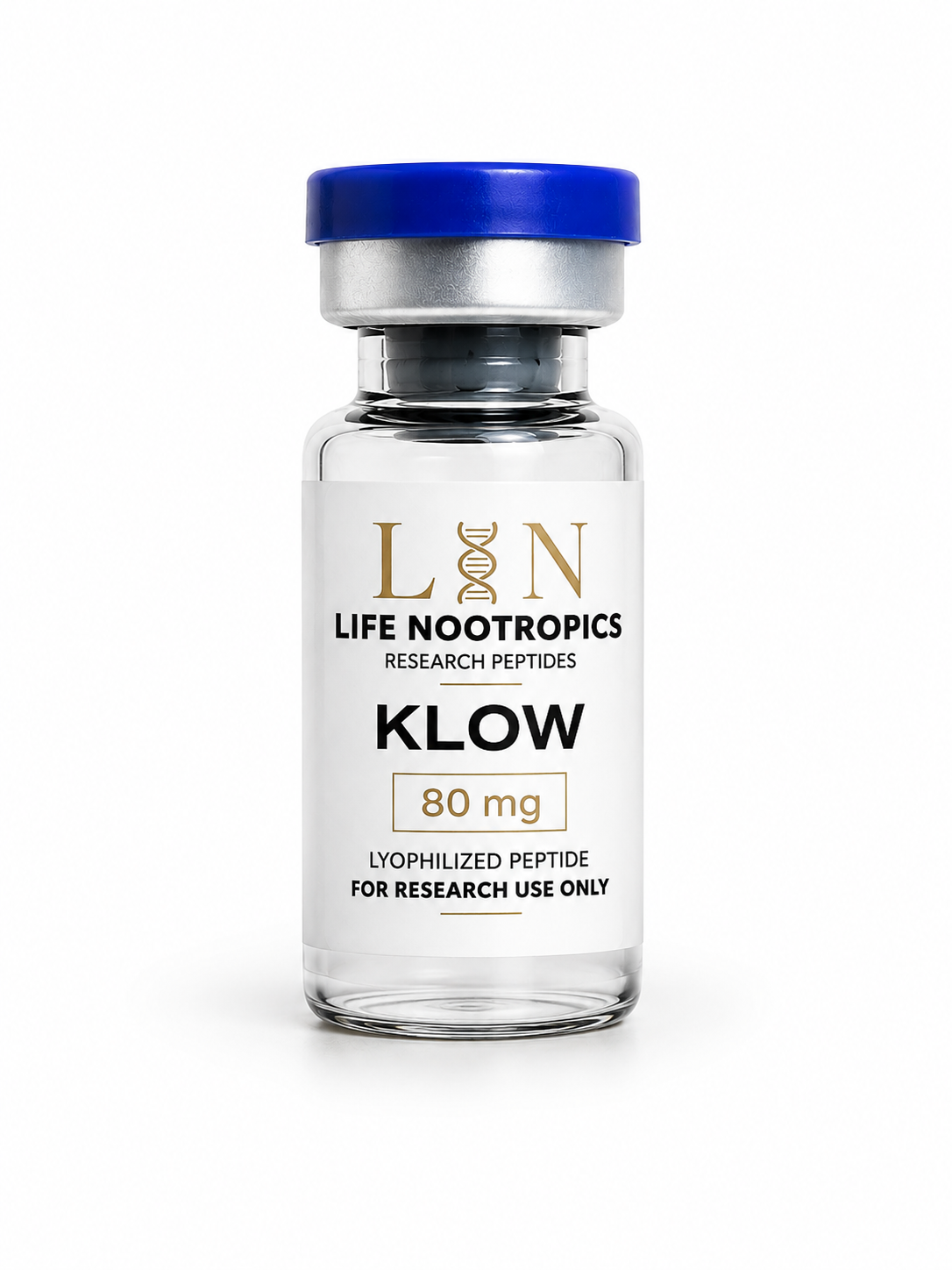
Lyophilized (freeze-dried) peptides offer extended stability when stored in desiccated conditions. In powder form, moisture is virtually nonexistent, preventing hydrolytic cleavage.
However, once reconstituted in Bacteriostatic Water or sterile solvent, degradation processes accelerate substantially. In aqueous solution, peptides become vulnerable to microbial contamination, oxidation, and enzymatic breakdown, requiring significantly tighter temperature and handling control.
Exposure to direct UV light and ambient humidity can drastically alter peptide molecular structure:
Peptide shelf life depends directly on baseline storage conditions. Even ultra-pure compounds (≥99%) can degrade prematurely if temperature or handling protocols are inconsistent. Lyophilized peptides preserved under optimal freezer conditions can retain stability for 12 to 24 months, whereas reconstituted solutions must be handled with precision.
Life Nootropics compounds are synthesized and packaged under rigorous quality control standards for maximum stability and batch consistency. However, disciplined post-delivery handling remains essential for maintaining molecular integrity throughout research.
Select products to compare specifications.